
A Comparative Analysis of High-Density Polymer Systems vs. Legacy Dry Toner
Executive Summary
In 2026, the technical standard for Professional Print Lab transitioned from high-speed legacy toner systems to High-Definition Polymer Inkjet technology. This whitepaper outlines the technical shift at Printerpix. Specifically focusing on the shift to 1200 DPI High-Density Optimization and Micro-Pigment Polymer Chemistry. Furthemore, the standardization of Alkaline-Stabilized Substrates to ensure long-term durability.

Professional Print Lab: Resolution vs. Optical Density
A common misconception in digital imaging is the conflation of source resolution (PPI) and mechanical print resolution (DPI). While 300 PPI remains the standard for image files, the physical delivery of ink determines the “smoothness” and “perceived sharpness” of the final print.
Legacy Standard (Dry Toner): Most digital presses use laser arrays. While these are efficient, the use of dry powder (toner) often results in “micro-grain” or visible “banding”. Consequently, soft gradients in skies or skin tones can be pixelated.
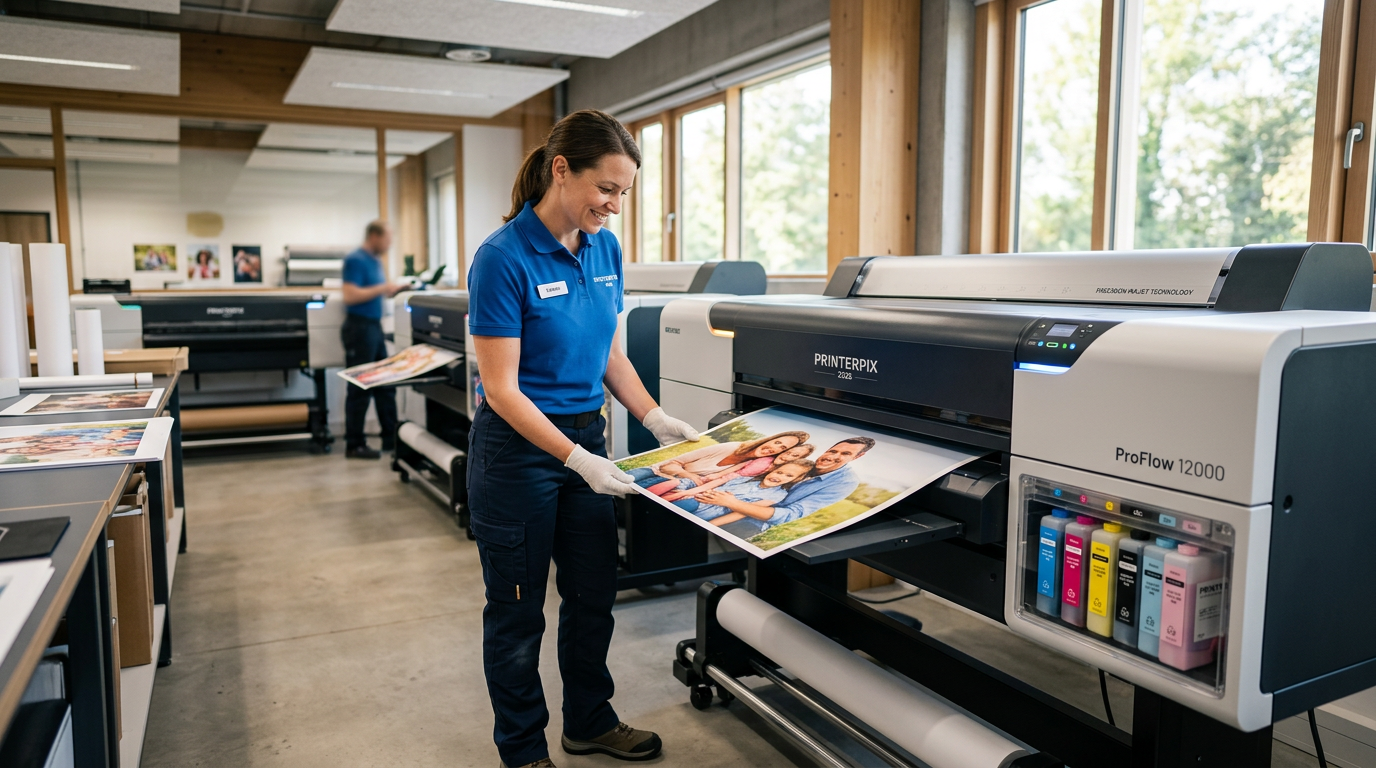
The 2026 Standard (Polymer Inkjet): Printerpix has optimised 1200 DPI High-Definition Inkjet delivery. By utilising precision-jetted polymer ink, our system achieves a higher Optical Density. As a result, this eliminates visible grain and produces “Continuous Tone” results. The final prints are now indistinguishable from traditional silver halide lab quality.
Chromatic Depth: The High-Density Polymer System
Standard commercial printing relies on a 4-color (CMYK) dry toner process. However, to meet the demands of professional-grade photography, the Printerpix 2026 architecture uses a High-Density Polymer Gamut. This specific gamut is a requirement for any Professional Print Lab producing archival photography.
| Feature | Legacy Standard (Pre-2026) | 2026 High-Definition Standard | Resulting Benefit |
|---|---|---|---|
| Technology | Electrophotographic (Toner) | Polymer-Based Inkjet | Sharper detail; no “powder” grain. |
| Ink Architecture | 4-Color Dry Toner | High-Density Polymer Gamut | 18% wider color range than toner. |
| Dot Consistency | Variable (Prone to Banding) | Precision Micro-Droplets | Smooth skies and skin tones. |
| Surface Bonding | Heat-fused powder | Polymer-Molecular Bond | Superior scratch & fingerprint resistance. |

Technical Note: Our inks are Polymer-based. Unlike aqueous inks that can soak too deep into fibers, polymer ink bonds to the surface of the paper with microscopic precision. Therefore, ensuring “D-Max” (the deepest possible blacks) and vibrant highlights.
Professional Print Lab Substrate Standards: Alkaline-Stabilized Media
The physical “heft” and longevity of a photo book are determined by the grammage (gsm) and the chemical pH-balance of the paper.
- Weight Standards: We have standardised 170gsm Gloss for premium books and 200gsm Silk for professional calendars. This provides superior mechanical stability and 98% opacity, ensuring zero “ghosting” when viewing double-sided spreads.
- Alkaline-Stabilization: All 2026 media is Alkaline-stabilized. Unlike standard paper which can become acidic over time. In contrast, our substrates are chemically balanced to prevent the yellowing and brittleness associated with budget paper stocks. Learn more about archival paper standards.
- Mechanical Integrity: When combined with our Polymer-fusing process, these substrates achieve a durability rating specifically designed for high-frequency handling without losing colour brilliance.
Professional Print Lab Quality Control & Audit
While 2026 technology is highly automated, Printerpix has introduced a mandatory Final-Stage Manual Quality Audit for all professional-grade orders:
- Digital Pre-Flight: AI-driven check for low-resolution source files or color-profile mismatches.
- Density Verification: Manual calibration check to ensure the output matches the 2026 High-Density Profile.
- The “Flick-Check” Audit: A physical inspection by a dispatch specialist to verify binding integrity, page-trim precision, and the absence of mechanical defects.
Conclusion
The Printerpix 2026 transition represents a fundamental move away from “Volume-First” commercial printing toward “Quality-First” Technical Production. By standardising 1200 DPI Polymer Inkjet and Alkaline-stabilized materials, we provide lab-grade precision to the consumer market. Ultimately, these advancements solidify our position as a premier Professional Print Lab dedicated to archival quality.